


The main cause of skin aging is the deterioration of the functional abilities of metabolism and cell growth, as well as slower removal of toxins and waste products, as well as a decrease in the supply of nutrients to cellular structures.Thanks to laboratory tests, it became known that this is a reversible process, meaning that there is always the possibility of increasing cell activity.Scientists have found that after the heat effect with the laser, one part of the cells of the dermis is activated, and the other part dies.As a general rule, dead cells die more than live cells, which have no chance of further repair.
As weak cells die, the vacated intercellular space is occupied by stronger cells.The thermal effect after laser treatment activates cell activity, restarting cell renewal and growth.The quality and speed of cellular restoration depends on the diameter of the laser beam.Its thickness cannot be more than 200 microns, this is when the formation of a healthy and young skin layer begins in the treated area.
For this reason, the laser rejuvenation technique was further developed with the introduction of fractional thermolysis.In this process, the laser beam is split into many microscopic beams, creating a mesh structure that affects the treated area.The innovative significance of the technology lies in the fact that the laser works in local areas, which preserves intact skin surfaces - accelerates skin regeneration and healing.
Types of fractional thermolysis
Fractional laser rejuvenation has been successfully used to tighten and strengthen the skin in one of two possible modes of exposure.They differ in the characteristics of the laser effect, the depth of penetration and the effect on certain areas.
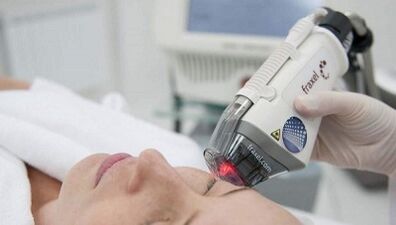
The first mode of action - fractional photothermolysis - affects the upper epidermal cells, literally vaporizing them.In other words, only the top layer of the skin is visible with this method.
The second mode of action affects the lower epidermal and dermal layers, leaving the upper layer of the skin intact.In both cases, the laser beam has a local effect.A cellular programming zone is maintained around the treated areas, which creates an opportunity for further skin restoration.In other words, heat shock activates new cell growth and metabolic processes in cells.
The first method of fractional photothermolysis removes superficial microscopic areas of skin cells, tightens the treated areas in a short time, so the result can be noticed immediately after the procedure.It perfectly smoothes superficial wrinkles, which is why it is considered an ideal remedy for eliminating the first signs of age-related skin changes.
The second method of the laser effect is suitable for solving problems deep in the skin, when the aging process can no longer be reversed.This method is a kind of "heavy artillery" of laser rejuvenation.By influencing the deep layers of the epidermis and dermis, the laser starts the metabolic processes, forms a new membrane frame, activates collagen production, so the skin becomes younger and restored from the inside.
It has been proven that the maximum efficiency of fractional photothermolysis can be achieved by using two exposure methods together.In this case, the skin receives a double effect - both externally and internally, which ensures a long-lasting skin rejuvenation effect.A similar technique is used by many modern medical institutions that have modern laser equipment.
The efficiency of the procedure
You can be assured that after fractional laser rejuvenation, your skin will be even, smooth and radiant after the first procedure.Within a week, the oval of the face is visibly tightened, wrinkles are smoothed out, and the complexion is evened out.In order to consolidate and prolong the result, procedures will be required at monthly intervals.
With combined fractional rejuvenation, the effect of youthful skin is achieved much faster and lasts longer, up to 2-3 years.Of course, the results are highly dependent on the patient's lifestyle.Renunciation of bad habits, preventive facial care, healthy lifestyle, proper and adequate sleep help to prolong the youth of the skin and prevent the process of aging and fading.
The undoubted advantage of the procedure is painlessness.The specialist uses superficial anesthesia, so during the procedure the patient feels only a slight tingling sensation in the affected area.
Progress of the procedure
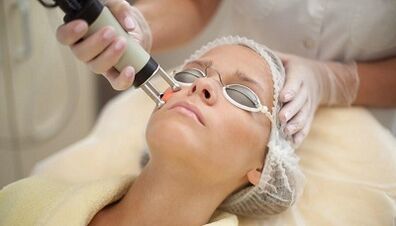
The undoubted advantage of the procedure is painlessness.The specialist uses superficial anesthesia, so during the procedure the patient feels only a slight tingling sensation in the affected area.Shortly before the start of the session, an anesthetic drug is applied, which can last up to an hour - it all depends on the surface of the treatment.
After completing the procedure, the specialist advises the client on the necessary skin care and treats it with special medicinal preparations.
Immediately after the procedure, the skin does not require further care.It will take a little more than a week to get back to your normal rhythm of life, while rehabilitation after surgery is much more difficult and takes longer.
In the first two days, the face will be puffy and then slightly reddened.Within 4-7 days, the dead cells begin to be removed, giving a fresh and youthful skin.
Indications of the procedure
If there are doubts about the effectiveness of fractional laser rejuvenation, then it is worth visiting the procedure first according to the indications, of which there are many:
- Acne.
- Pigmentation.
- Spider veins, stretch marks and scars.
- Enlarged pores.
- Wrinkles, crow's feet around the eyes.
- Sagging, aging and sagging skin.
Contraindications to the procedure
Like all salon procedures, fractional rejuvenation has several contraindications:
- Benign and malignant formations in the treatment area.
- Oncological diseases and ongoing chemotherapy.
- Dermatoses and photodermatoses in the area of the procedure.
- A herpes infection appeared within a month.
- Acute infectious infections, immunodeficiency.
- Chronic diseases, such as bleeding disorders, diabetes mellitus, thromboembolic diseases.
- Psoriasis and high blood pressure.
- A history of keloids or vitiligo, a history of vitiligo or keloids in your family.
- Fresh tan, recent visit to the solarium.
- Pregnancy and breastfeeding period.
- Use of retinoids in the past six months.
Combination of fractional rejuvenation with other procedures
This procedure is always carried out only after a preliminary consultation with the beautician.For obvious age-related changes, maximum effectiveness can be achieved with laser skin resurfacing, not fractional rejuvenation.
In some cases, it is not possible to perform surgical interventions, namely endoscopic facelift, blepharoplasty or the introduction of threads for screwing.However, laser rejuvenation helps to maintain and enhance the effectiveness of the procedures.It complements their results and perfects the client's appearance.
Procedures such as mesotherapy and plasma lifting, as well as biorevitalization based on hyaluronic acid, can be perfectly combined with laser rejuvenation techniques.